Home / Taking part
Projects and Programmes
How to propose something, the summer programmes, and what has been held here.
Last updated 17 Aug 2026
Most of what happens at the Foundry was proposed by somebody who wanted it to happen. There is no programming committee choosing a season in advance: there is a proposal process, a weekly meeting, and a calendar that fills up as people bring things to it.
This page explains how to propose something, and records what has been proposed and held.
How a proposal works
- Write it down. Submit a project form, or send a document. What is being proposed, when, who is responsible, what it needs from the association (space, equipment, help, money), what it offers back, and what happens if it does not work.
- It goes to the group. Proposals are posted ahead of the weekly online meeting so people can read them beforehand, and the meeting is for discussion rather than first impressions.
- The active stewards decide. Questions get asked, often sharp ones, and proposals usually come back improved rather than rejected outright.
- It goes in the calendar. Dates are held collectively — the theatre, the rooms and the kitchen cannot be in two places at once.
What gets asked
Anyone bringing a proposal should expect these, because they come up every time:
- Who is actually doing this? Not who supports it — who is responsible when it is raining and half the volunteers have left.
- Where does the material come from? A food or drink product raises supply chain questions: who grows it, under what conditions, from how far away. A project that cares about land and people here cannot be indifferent to land and people elsewhere.
- Is the timing realistic? International participants plan months ahead. Several paid events have been cancelled for lack of sign-ups, and short notice was usually the reason.
- What does it cost, and who pays? Use of the space is normally paid for, along with memberships, and that income is part of how the house stays open.
- Is it legal? Producing food, drink or animal products for sale needs certification and premises to match.
- If there is grant money, who gets paid? Two grant-funded events left a sense of unfairness — in one, a group quietly paid themselves many times what others received; in the other, only outside participants were paid. The rule that came out of it: grant-funded events go ahead when everyone involved is remunerated equitably and a financial report is published afterwards.
The summer programme
Since 2026 the summer has been structured into an open, published shape rather than assembled ad hoc.
The year is built around two kinds of week. Summer School weeks are planned in detail well in advance and packed with workshops, teach-ins and seminars. Sobremesa weeks are the opposite by design: unplanned, built around one large communal meal at the end of each day, with an open schedule on the wall that anyone can write into at the start of the week.
The open call goes out the winter before. Self-organising means bringing your own subject and programme, cooking collectively if you want to, and joining the common cleaning and care of the space. The association provides the infrastructure and some help on site.
To propose something for a coming summer, write to foundry@bravosfoundry.com.
Some things that have happened here
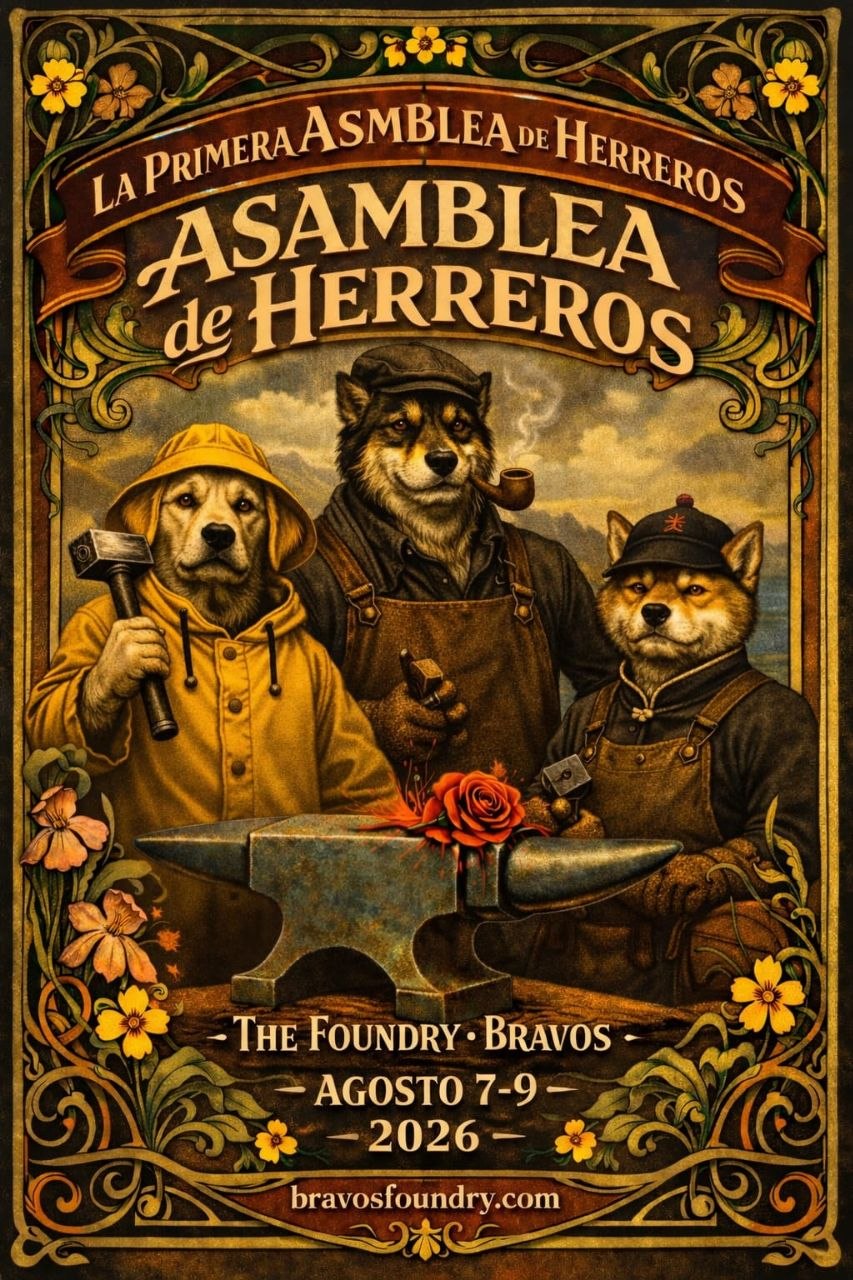
Primeira Asamblea de Herreiros en Galicia — from 7 to 9 August 2026, the first assembly of Galician blacksmiths. Smiths amateur and professional, from Spain and abroad, spent the weekend at the forge making pieces for the bridge and talking about iron, history and the future of the craft. It was supported by the Concello de Ourol and covered by La Voz de Galicia and El Progreso. For a building that made iron from the 15th century until 1809, and a village named after its ironworks, it was the most fitting thing that has happened here.
Sensing the Soil, Reading the Land — a four-day intensive on socio-ecological land stewardship with Nance Klehm, held in November 2025, with a lower rate for local participants.
Campeonato de Tute — a card tournament across four Sundays in spring 2025, ending with dinner and a dance, with a handmade trophy forged on site and prizes from a local spa. Posters went up in bars, associations and the council across the district. It is one of the projects that most successfully connected the house to its immediate neighbours.
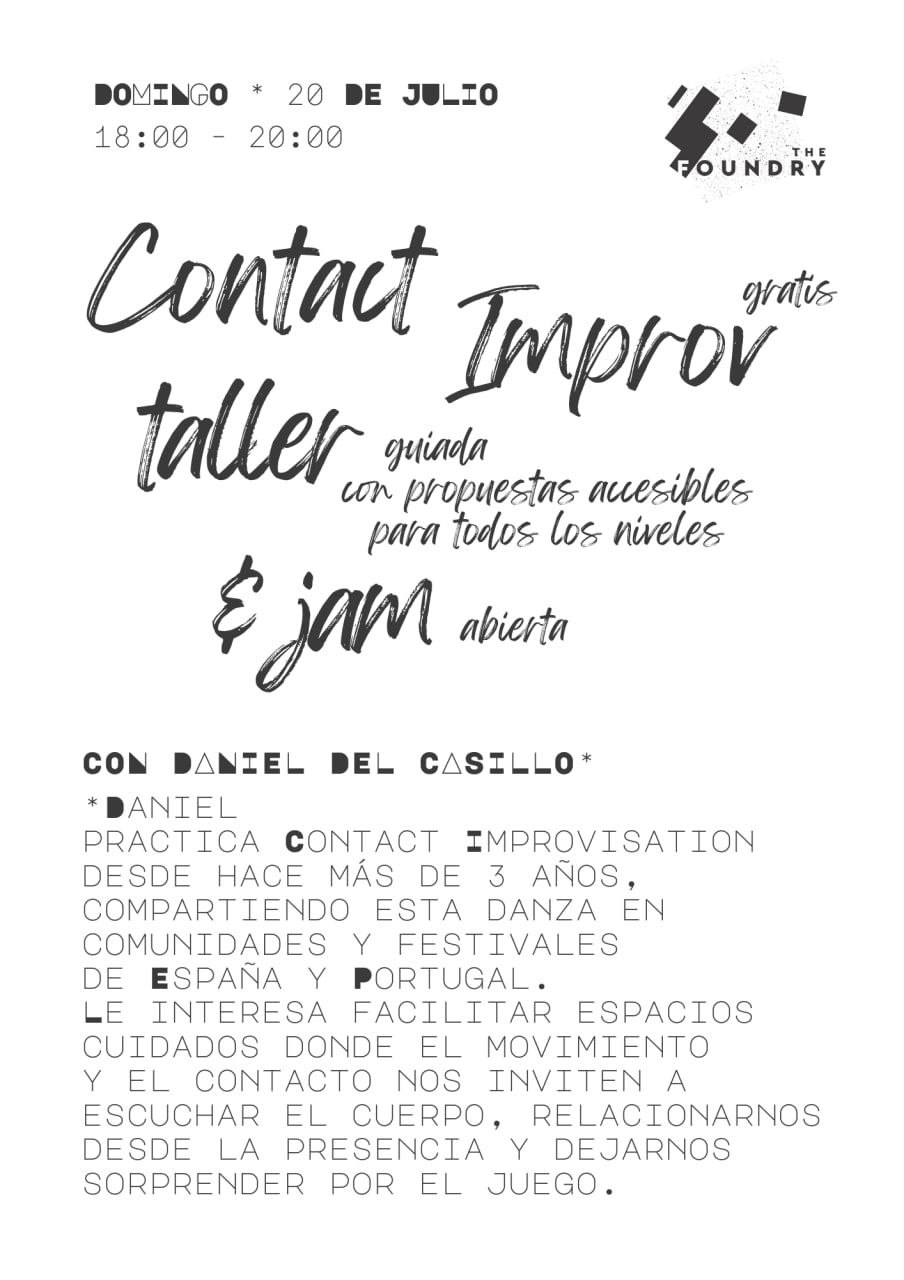
Contact improvisation workshop and jam — free, open to all levels, an afternoon in July 2025.
Fungi festival and Amanita courses — mushroom gatherings and recurring three-day courses on identification and relationship with fungi, run with visiting practitioners. See the Land Care section for the cultivation work these connect to.
Bodywork and mindfulness retreats — multi-day retreats combining morning movement practice, hands-on work on the building and land through the day, a sharing circle, and evening sessions. Some hold silence overnight, which the rest of the house is asked to respect.
The total solar eclipse, 12 August 2026 — totality crossed Galicia in the early evening, low over the western horizon, the first total eclipse visible from mainland Spain in over a century. It drew proposals from photographers and observers well in advance, and shaped the programme around it.
Standing projects
The Studio. A recording space for musicians and other artists staying at the Foundry, currently able to record up to three instruments at once and suited to composers, small acoustic bands, singer-songwriters and podcast makers. It is free to any member with basic knowledge of the equipment, or who has been shown how to use it by someone in the house.
The community permaculture garden. A proposal to develop the existing garden area as a vegetable garden open to neighbours, members and volunteers — working first with what is already growing and following the seasons rather than imposing a plan. Distinct from the food forest, which is described on the Land Care section.
Foundry Liquors. A proposal for a Galician spirits brand as both an income stream and a cultural calling card, including alcohol-free versions of traditional Galician drinks. The proposal is on the table with the supply chain question still being worked through — how ingredients that do not grow in Galicia, such as coffee and cane sugar, could be sourced without contradicting what the association stands for.
Proposing something
Write to foundry@bravosfoundry.com with a description of what you want to do, when, and what you need. If you are nearby, come and see the space first; if you are not, join a weekly meeting.
Things that tend to work here: hands-on formats, anything that brings local people and international visitors into the same room, work that leaves the place better than it was, and projects whose organisers are physically present.
Things that tend to struggle: expensive short-notice events aimed at an audience that does not yet exist, and proposals that depend on somebody else doing the organising.