Home / Land and place
The Building
A 150-year-old forge: how its systems work, what has been restored, and what still needs doing.
Last updated 16 Aug 2026
The Foundry is a forge. The building takes its name from the ironworking that was done here, the hearth and anvil are still in place, and the village is called Bravos, in the parish Santiago de Bravos. The house is around 150 years old, built in local slate and river stone, and it has been in continuous adaptation ever since.
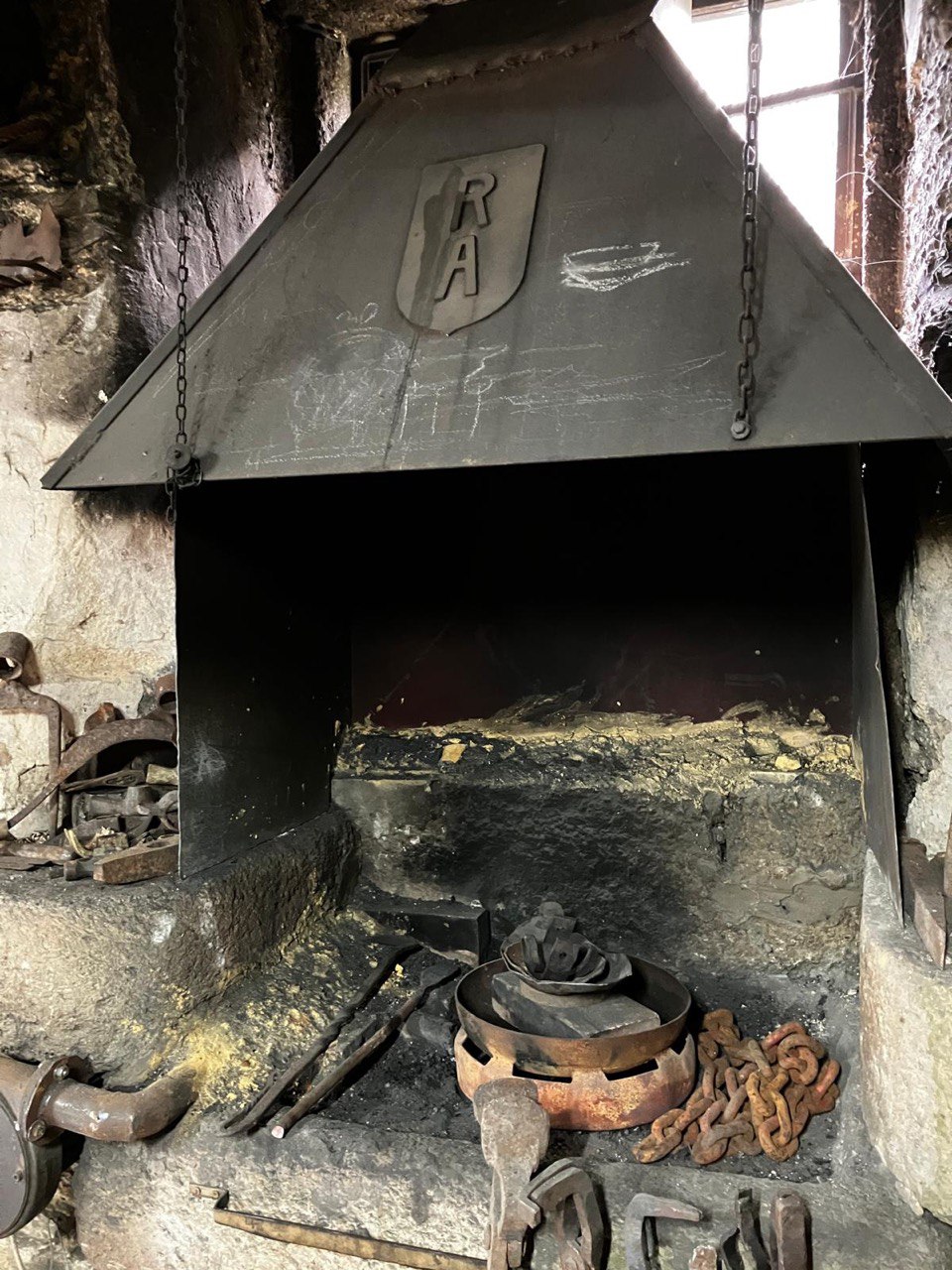
This page records what the building is, how its systems work, and what has been repaired. It exists because knowledge about an old house tends to live in one person's head, and a house outlasts any of us.
What is here
Under one roof and around the yard: a theatre and large hall used for events, a wood workshop, a metal workshop and the old forge, a ceramics area in preparation, guest rooms upstairs, a kitchen, a boiler room, and a bar. Outside there is the huerta, a dome, a mill by the river, a bus, and a campsite. Some of it is finished, some is in progress, and some is deliberately left as it is.
The working attitude towards all of it was put well by one of our builders: if it isn't broken, don't fix it — and if it is broken, get the professional.
Heating and hot water
The house has two independent systems, and knowing which is which saves both money and arguments.
Underfloor heating runs on a heat pump. It uses little electricity, costs far less per unit of heat than diesel, and is the system to use by default. It is slow to respond, so it is left on through the winter rather than switched on and off. Temperature is set from the boiler room, with thermostats in three rooms; the floor should never be run above about 35°C. If the floor is cold when the display says otherwise, check the water pressure before anything else — falling pressure has been the recurring fault.
Radiators and hot water run on diesel. In winter the house uses roughly 100 litres a month. It is better not to let the tank run to empty; order at around 100 litres remaining. In spring the heat-pump switches and the recirculation pumps can be turned off and the radiator valves closed.
Manuals live in the bottom drawer of the wardrobe in the balcony room.
Water and drainage
Two large septic tanks serve the whole house; upstairs and downstairs toilets all drain to the same place. They are big enough that emptying is a question of decades, not years, but the filter should be rinsed once or twice a year with a hose.
If the toilets smell, a sachet of bacteria flushed through will usually restore the balance. If it does not, something is actually wrong. A pump was installed because of rock and levels underground, and it can be restarted from the electrical panel a few metres towards the house. Textiles must never be flushed — the one serious failure was caused by cloth jamming the pump. Paper is fine.
A dry toilet exists and is not currently in use. The reason is honest: storing and composting the waste of a large, changing group is real work that somebody has to want to do. If someone designs a system and will run it, that conversation is open.
Electricity
Power cuts happen occasionally in storms. If the street lights are out too, it is the whole neighbourhood and it will come back on its own. If it is only the house, the switches in the main box, or the fuse box in the kitchen, are the first things to check.
The restoration, 2025 onwards
Since early 2025 the association has run repair weekends, roughly monthly, and longer work retreats. The list below is what has actually been done rather than what is planned.
The back wall. Cleaned, raked out and repointed by hand. The lower section alone took six days of cleaning, nine days of spiking and one of clearing up, and used seventeen bags of Roman cement. The total wall area to be treated is around 360 square metres, so this is a project measured in years.
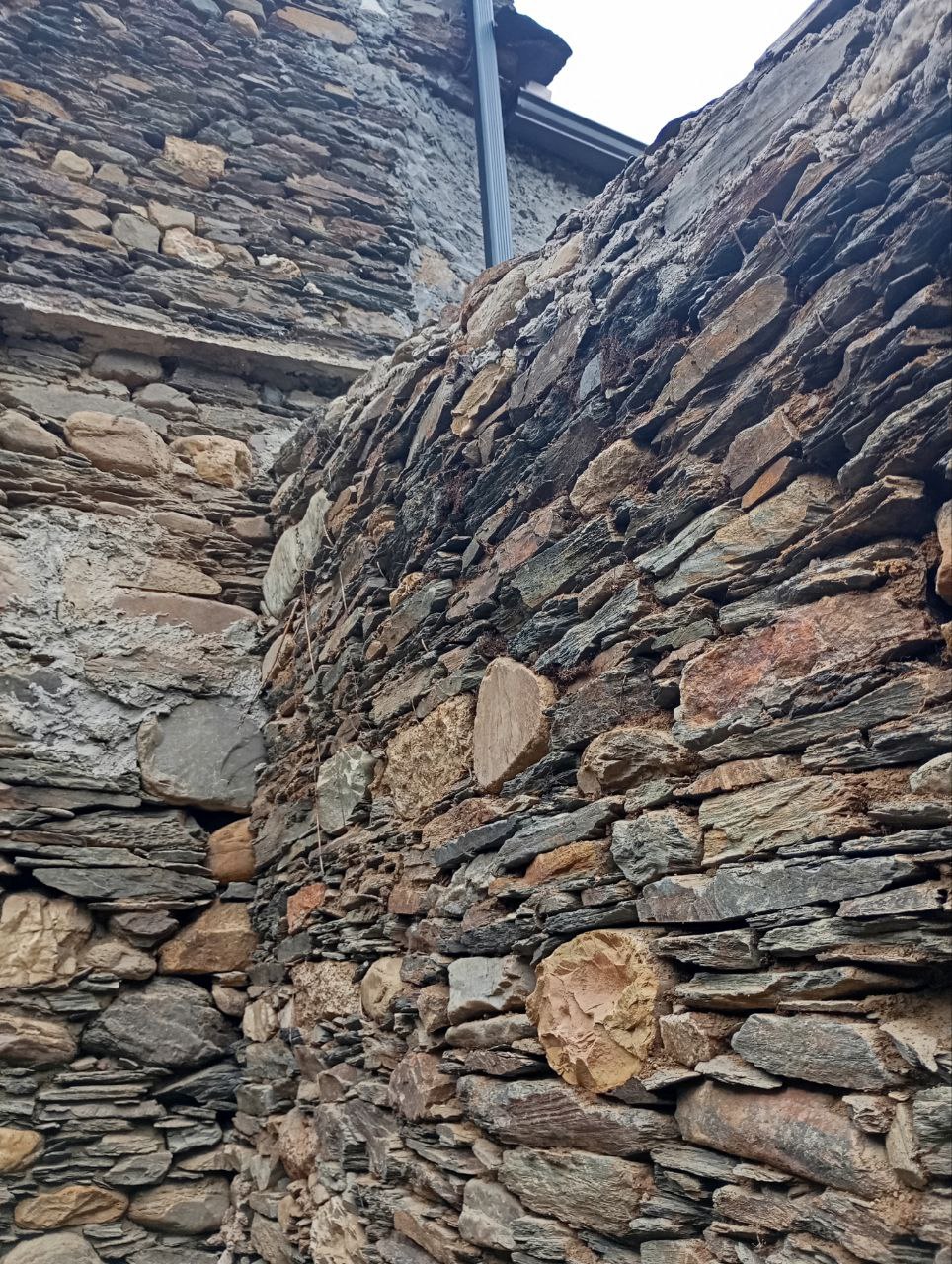
The mortar matters as much as the labour. The aim is a permeable finish that lets the wall dry rather than sealing moisture inside it — a dry wall is a warmer wall, and a warm wall is a cheaper one to heat. A good deal of inappropriate cement from earlier decades still needs taking off.
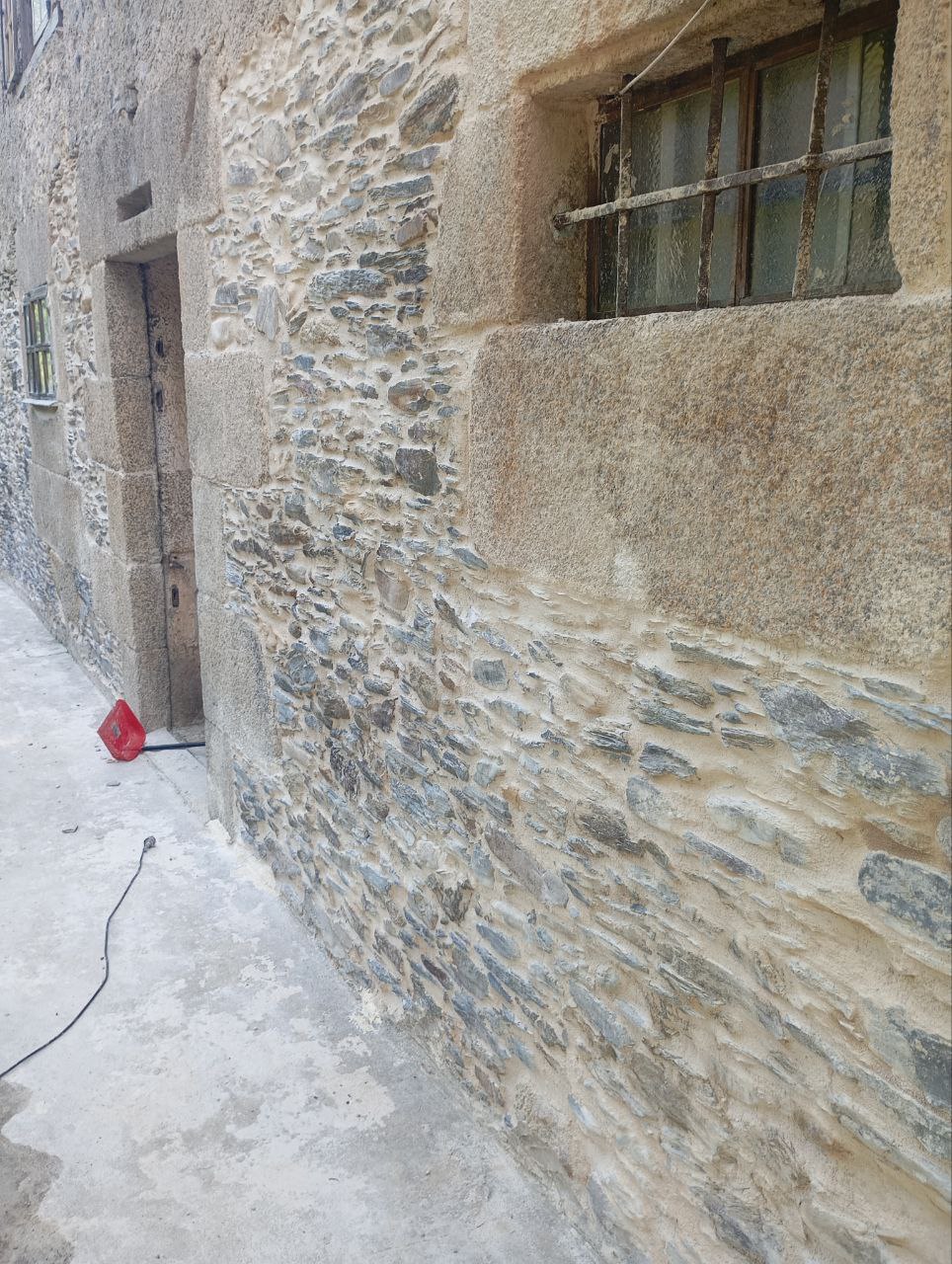
A window and its surround were rebuilt in June 2025, rot and rubble removed and the opening made solid again.
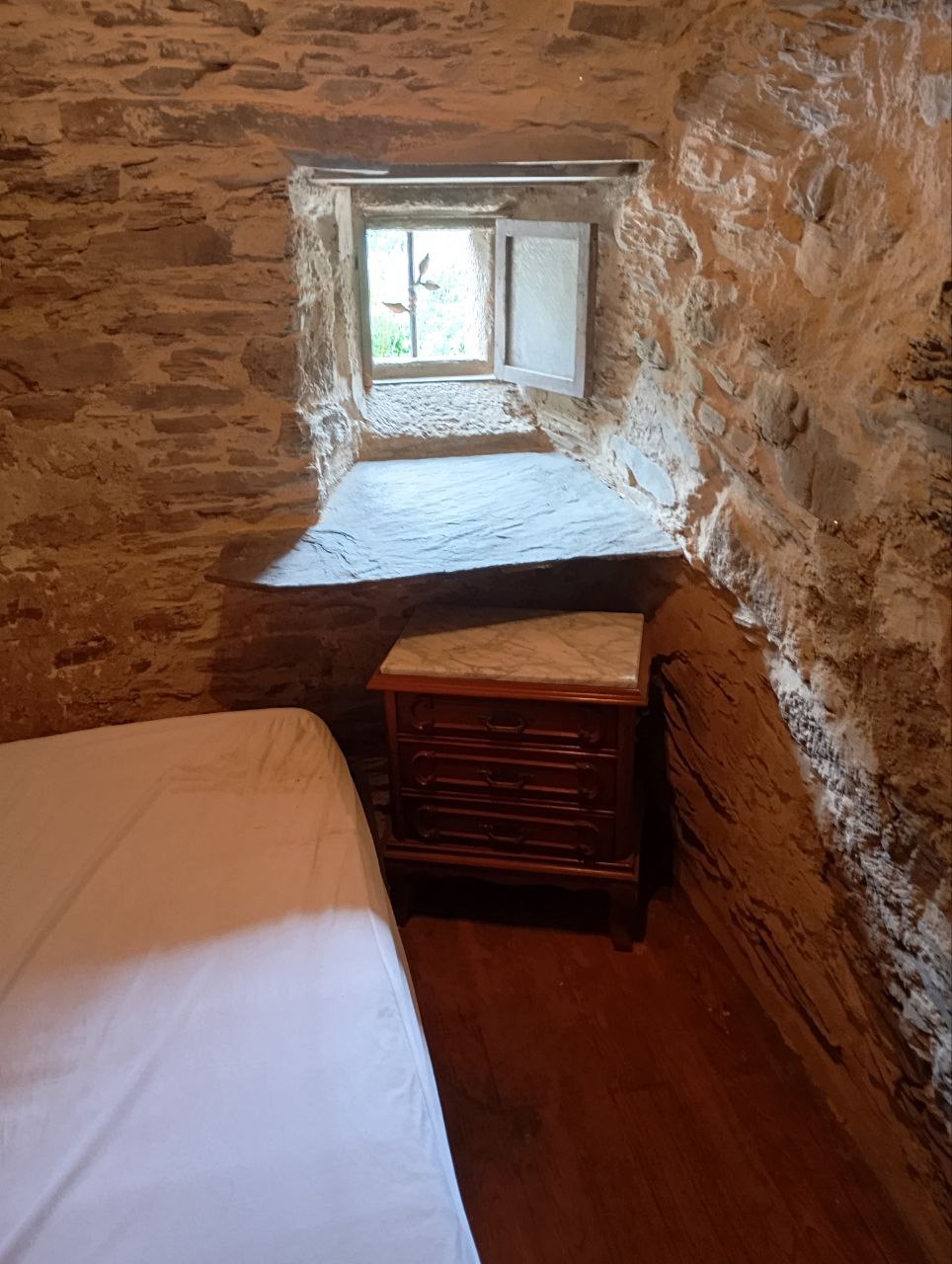
The garden room by the entrance — previously a chicken shed and a place things were dumped — was given a reinforced lime-cement floor laid to drain, with its doorstone lowered by seven centimetres, and is being roofed with slate and glass rather than corrugated plastic. Chestnut beams for it came from a member's own land.
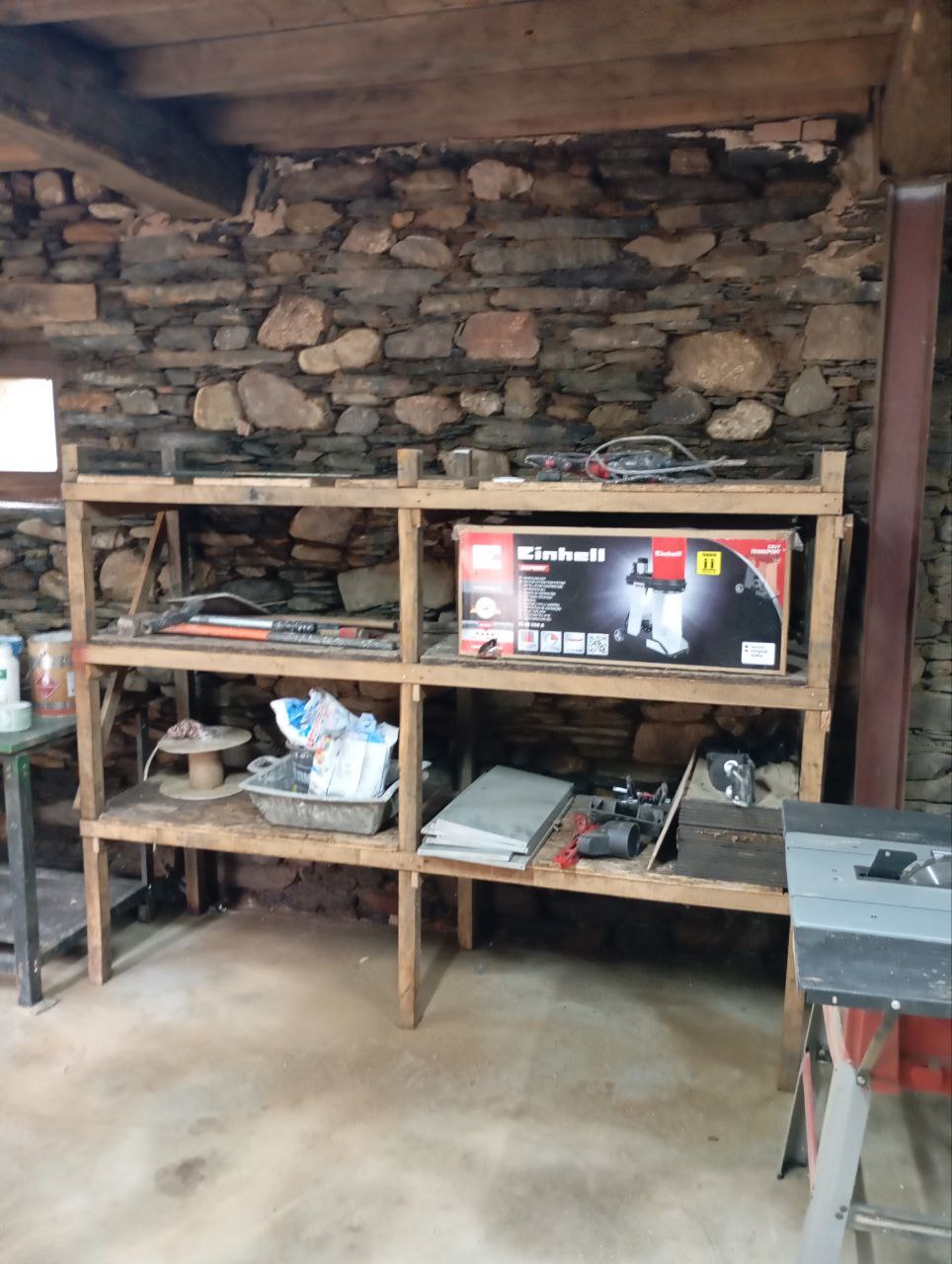
The workshops were cleared, sorted and made usable, and the steps and fencing were repaired so people can move around the site safely.
What still needs doing
In rough order of urgency:
- Chimneys. Access and safe working at height is the first problem; one chimney is not fully covered, which is likely the main cause of water coming in. A full rebuild has been quoted by a local roofer, and the alternative is a supervised volunteer job with scaffolding and someone experienced taking responsibility for the work and the workers.
- Roof and rain. Cracks and holes to close, and sections of roof with no insulation where the wind comes straight through.
- Outside walls. Pressure-cleaning, removal of loose covering and vegetation, repointing with permeable mortar. The largest job on the list.
- Windows. Most of the house has double glazing. The back and the balcony doors are single pane, and these are the original frames, over 150 years old. Fitting double glass into them is effectively impossible without replacing them, so this is a choice between the fabric that is already here and something new, expensive and better insulated. In the meantime, sealing tape and closing gaps buys real comfort for very little.
- Upstairs rooms. Freshening, lighting, and radiators that are already bought but not yet installed.
Ideas being weighed
None of these are decided; all have been discussed.
- A wood-fired heat source in the main hall and an improved fireplace in the smoke room, to keep the house dry through the rainy season and cut heating costs. Bottled-gas stoves are the efficient stopgap.
- A heat exchanger — copper coil around a chimney flue, feeding the floor circuit. Attractive in principle; the objection is that the floor circuit is closed and must not get hot, so it needs a buffer tank and proper pressure relief. Steam under pressure is genuinely dangerous, and this is not a job to improvise.
- A rocket mass heater, which members have built elsewhere and could be built here as a workshop.
- A solar boiler, and beyond it an energy community with the neighbours, putting panels on part of the field before the bridge. Two quotes were sought and neither came through, so this remains an idea looking for someone to carry it.
Keeping the knowledge
Much of what is on this page existed only as messages in a chat, or in the memory of whoever last fixed the thing. That is a fragile arrangement for a building used by people who rotate through it.
There is an ongoing effort to write the practical knowledge down: where the valves are, who to call, what failed last time and why. A proposal to feed it all into a chatbot was discussed and set aside for two reasons worth recording — such systems invent details when they do not know, and lowering the barrier to improvising on a heating system is not automatically a good thing.
There is also a tool and machine inventory, including a corner of the workshop where broken tools are kept for parts. If you take something from there, expect it not to work.
Ownership
The buildings are not yet owned by the association. Moving them into collective ownership is the direction of travel, and it is the reason questions about who pays for a chimney are also questions about governance: an association that cannot commission and fund its own repairs is not yet stewarding the place. The work described above is being done on that understanding.
Helping
Repair weekends are announced in the association's channels, and the work is suited to a wide range of skill — there is as much cleaning, sorting and carrying as there is skilled stonework. Useful things to bring are gloves, boots and a head for heights if you have one.
Bear in mind that most of this work cannot be done in heavy rain, which in Galicia shapes the calendar more than anyone's preferences do.