Home / Start here
Timeline
From a 15th-century ironworks to an association working to hold the place in common.
Last updated 17 Aug 2026
The short version, in dates: five centuries of ironworking, two of ruin, and eight years of this project. Everything here is described more fully on the pages it links to. Anyone can add to this list — see the note at the bottom.
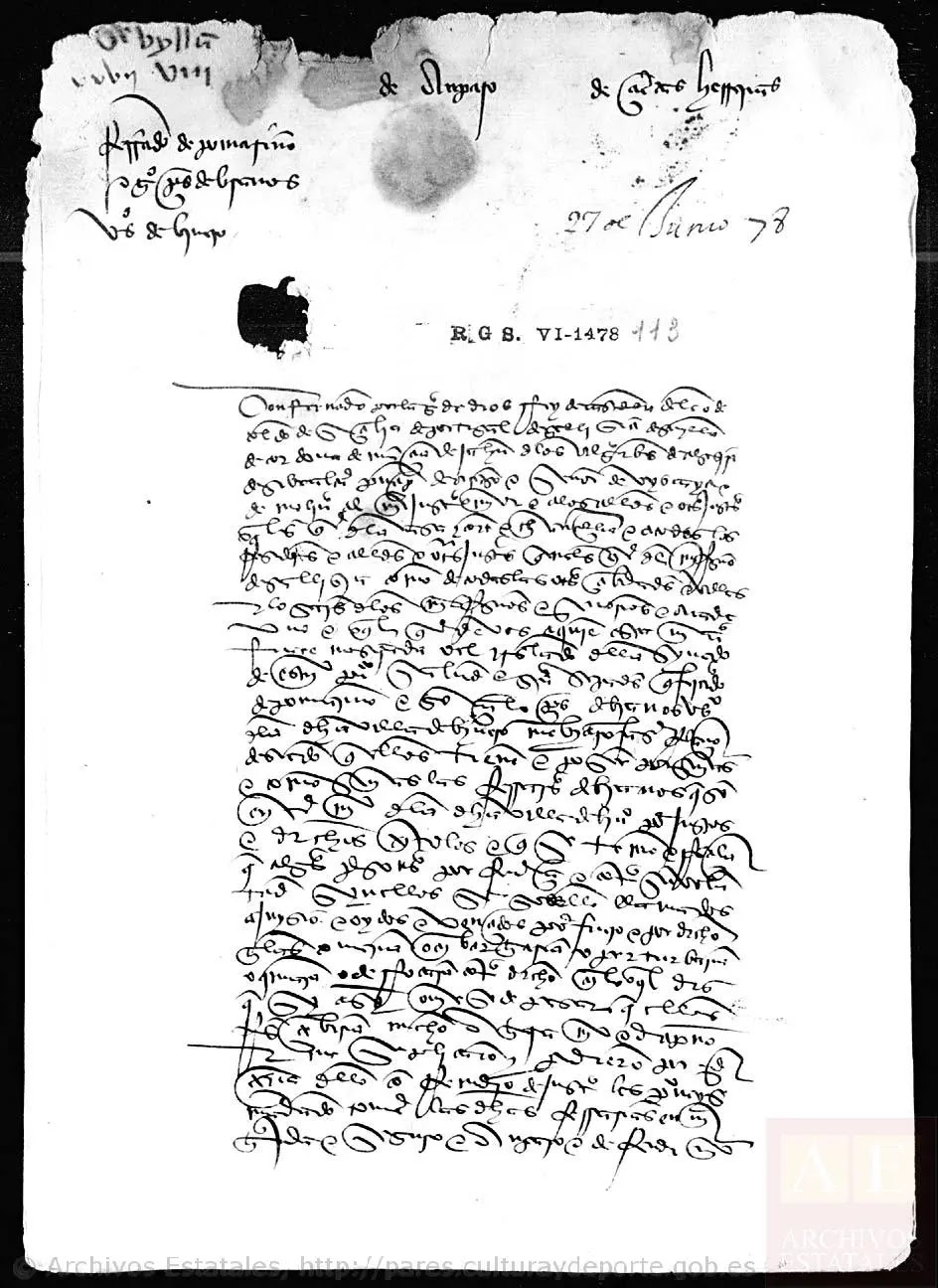
The amparo real document
- 1467–1469The Irmandiño revolt sweeps Galicia. A peasantry worn down by plague, bad harvests and seigneurial abuse declares it will accept no lord nor fortress over it, and destroys some 130 forts. The tower at Bravos survives.
- 1478The first written trace of the ironworks: an amparo real in which King Ferdinand backs Fernando de Pomariño and Gonçalo Peres de Bravos as lawful owners of the Bravos ferrerías. The king writes the word in the plural, so there was more than one furnace. The document is effectively a 15th-century eviction notice — the site was occupied, or about to be.
- 1551Pedro de Carnoza leases the works, agreeing to supply around 600 kilos of iron to the market at Viveiro.
- 1600The Cora family appear in the record as owners. They will hold the ferrería, exact tribute from the surrounding farms and live in the pazo for the next three centuries.
- 1614The magistrate of Viveiro punishes two charcoal burners for felling more than 200 oaks to fuel the Bravos furnaces. In 1640 a dozen neighbours from Ourol and San Pantaleón accuse the owner and his Basque leaseholder of destroying their forests for charcoal.
- 1640The medieval tower having been lost to fire, Pedro Fernández de Cora builds a chapel on the site. It still stands, and members of the family are buried in it.
- c. 1720sThe fires go out, most likely for want of wood. The 1753 catastro de Ensenada records an iron factory at Bravos that has not worked in over thirty years.
- 1758The works are leased again, for twenty quintales of iron a year — roughly a thousand kilos — and supply metal parts to the naval arsenal at Ferrol.
- 1788The forest is exhausted a second time and production stops for good. A legal appeal cites Bravos as proof that the iron industry is unsustainable; Antonio Raimundo Ibáñez, founder of the Sargadelos works, calls it a case of mala política de monte.
- 1809Napoleonic troops reach Viveiro and some five thousand locals march against them. The ferrería is badly damaged, the chapel destroyed. The hydraulic hammer never strikes again.
- 19th centuryThe Coras, by now a naval family, rebuild. The manor house at the centre of today's Foundry is said to stand on the site of the old ironworks. The chapel is repaired.
- 1948After the Civil War, the last doña of the ferrería fears the maquis and has a detachment of Guardia Civil stationed at the house. They leave architectural traces, including an improvised holding cell.
- 1960sThe remaining slag is carted off to feed the ENSIDESA steel furnaces. Almost nothing of the old ironworking installations survives above ground.
- 1970sTeresa de Cora, the last of the family to live here, dies. The ferrería is abandoned, as much of rural Galicia is in the century of emigration.
- November 2017The Foundry is announced: a space where intellectuals can work without the university and artists without the grant programme. Two big houses, a servants' house, a small church, a mill, roughly 700 m² of building and 26,000 m² of land — most of it, as the call admits, in pretty bad shape. Renovation is to start in the spring.
- 2018Work begins. The architect Anna Kostreva publishes a plan for the site in April; a floor is laid in July. In summer, the Berlin soil collective MamaSoil comes to analyse the ground. See Land Care.
- October 2019El Confidencial runs an article on the German who turned a Galician village into an intellectual paradise. See Getting the Word Out.
- Summer 2020Asociación The Foundry is formally constituted on three commitments: openness, self-organisation, and the exclusion of profit.
- October 2020The Foundry takes part in the intergalactic memorial carnival for David Graeber.
- 2021A summer of blacksmithing workshops, a dome, alternative-education conversations, and mushroom growing with Proxecto Dispersor. In November a delegation of Zapatista women visits to speak about Chiapas. Two hectares of forest are bought to stop them becoming a plantation, bringing the land to four or five hectares.
- 2022Ecologic Queer Energy Harvesting, with Paula Pin and support from the Gathering for Open Science Hardware, builds a windmill on site.
- February 2023Futuro Habitable is announced: a legal structure modelled on the German Mietshäuser Syndikat, designed to take land and housing permanently off the market. See How we govern ourselves.
- August 2023Territory beyond state and property: a week of gathering and discussion at the Foundry.
- 2023The fifth year. Renovations near completion; a fermentation station in summer, a fully equipped metal workshop in autumn, a self-organised school running in the finished theatre. The association is financially sustainable, if precarious.
- January 2024At the general assembly, the founder proposes that the presidency change hands, arguing that it would be healthy for the association if power circulates.
- 2024The first Occupy the Foundry call goes out, offering the space to a collective for two years. A group of stewards forms and takes over day-to-day care.
- February 2025A general assembly elects a new board and the steward circle takes on the running of the place. At the close, a fallen eucalyptus log standing for the Foundry is inoculated with shiitake mycelium while each steward speaks an intention.
- February 2025The reading circle meets for the first time, on Jo Freeman's essay about structurelessness. The first garden beds of the year go in.
- March 2025A long work weekend repairs the heating, cuts firewood, clears brambles and swaps seeds. Monthly repair weekends become the rhythm. See The Building.
- May 2025Eucalyptus logs are cut, dried and leached in the river, testing whether mushrooms will grow on a wood most guides say will not take them.
- June 2025The back wall is stripped and repointed by hand: six days cleaning, nine days spiking, seventeen bags of mortar for the lower section alone. The association joins the march against the pulp mills in Pontevedra.
- August 2025Post-fire land techniques arrive from peers at the Mount of Oaks: contour lines, burnt-wood stakes, the A-frame level.
- November 2025Sensing the Soil, Reading the Land — a four-day intensive on socio-ecological land stewardship, at a lower rate for local participants.
- March 2026The house agreements are published on the blog, setting out in one document how the place is meant to work.
- July 2026The general assembly renews the board, agrees a weekly volunteer assembly on cleaning day and a house assembly on Thursdays, forms a memory working group, and settles for now that the land will be cleared and cows put to pasture. Draft statutes carrying the asset lock are circulated for comment.
- July 2026Occupy the Foundry is called again: from autumn 2026, the space is offered free to a collective for up to two years, with a transition envisaged in early 2027. See Volunteering and stays.
- 7–9 August 2026The first Asamblea de Herreiros in Galicia. Blacksmiths, amateur and professional, from Spain and abroad, spend the weekend forging pieces for the bridge and talking about the future of the craft — in a place that made iron for three centuries. Supported by the Concello de Ourol.
- 12 August 2026 — A total solar eclipse crosses Galicia in the early evening, the first visible from mainland Spain in over a century.
Adding to this page
This page is a Google Doc like any other, in the Timeline folder in Drive. Add a line in the same shape as the others — a date in bold, then a dash, then what happened — and it will appear in the right place with a dot on the line. Keep entries to one or two sentences and link to the page that carries the detail.
Much of the older history here comes from research published on the association's blog, which cites its archival sources in full.
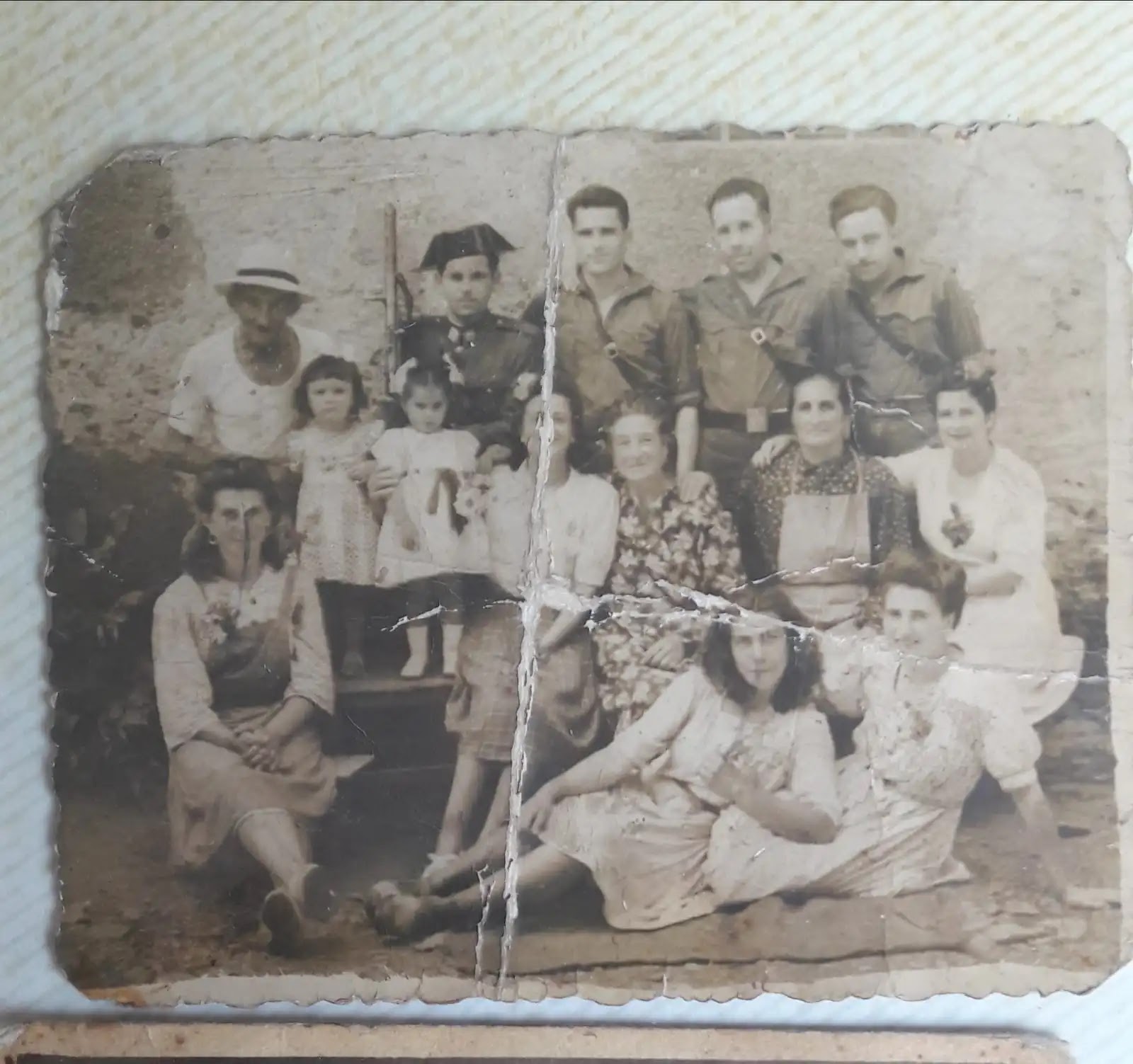
The Cora family
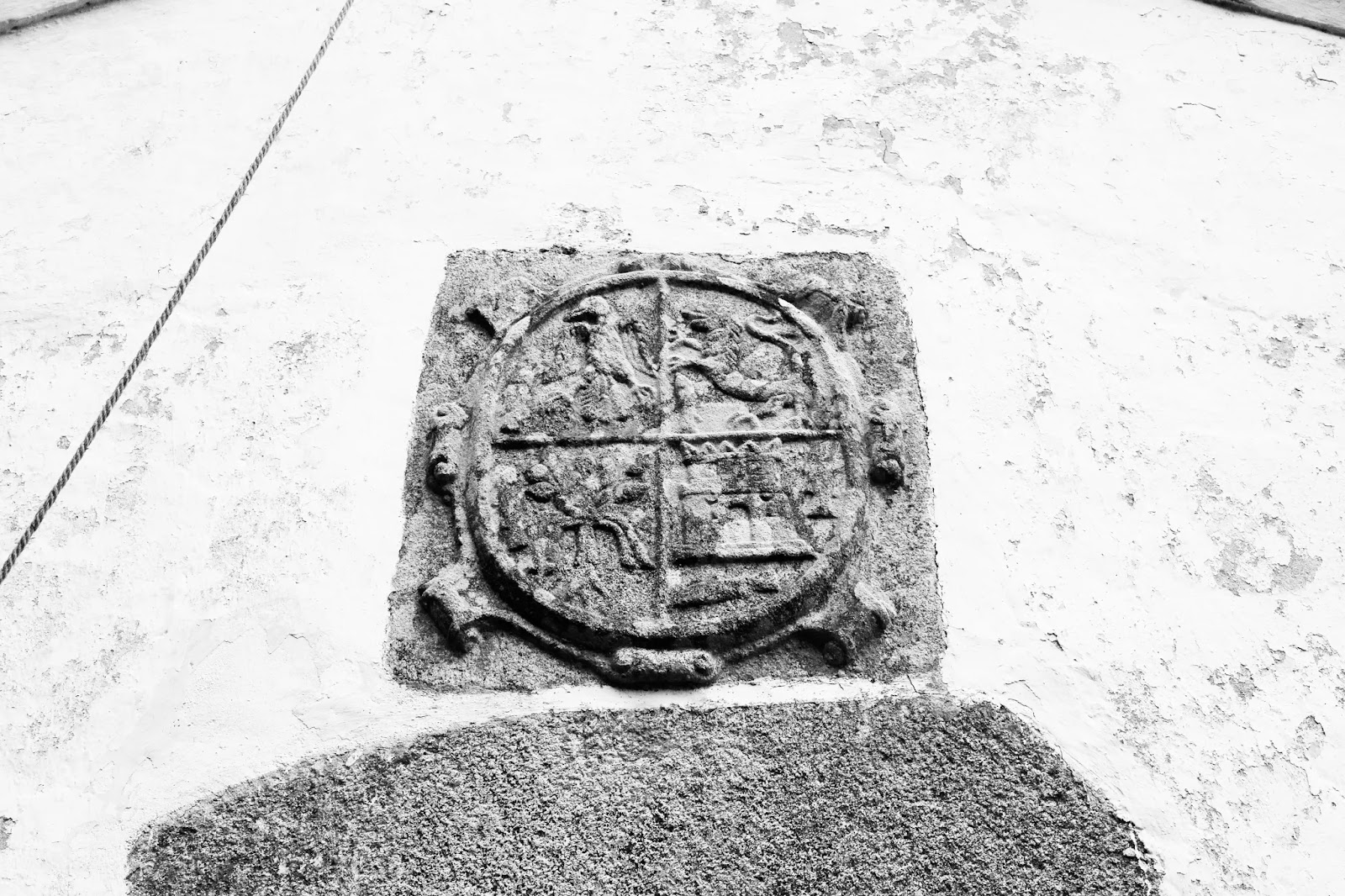
The Cora coat of arms